Chemotherapy-Induced Peripheral Neuropathy Treatment
Helping people with peripheral neuropathy
Every treatment plan is customized based on the cause of your neuropathy, your symptoms and your goals
Patients who complete our programme experience significant clinical improvement
What Is Chemotherapy-Induced Peripheral Neuropathy?
Completing chemotherapy is a tremendous milestone.
For many people, however, recovery doesn't end when cancer treatment does. Lingering nerve pain, numbness, tingling, or weakness can continue to affect everyday life long after chemotherapy has finished.
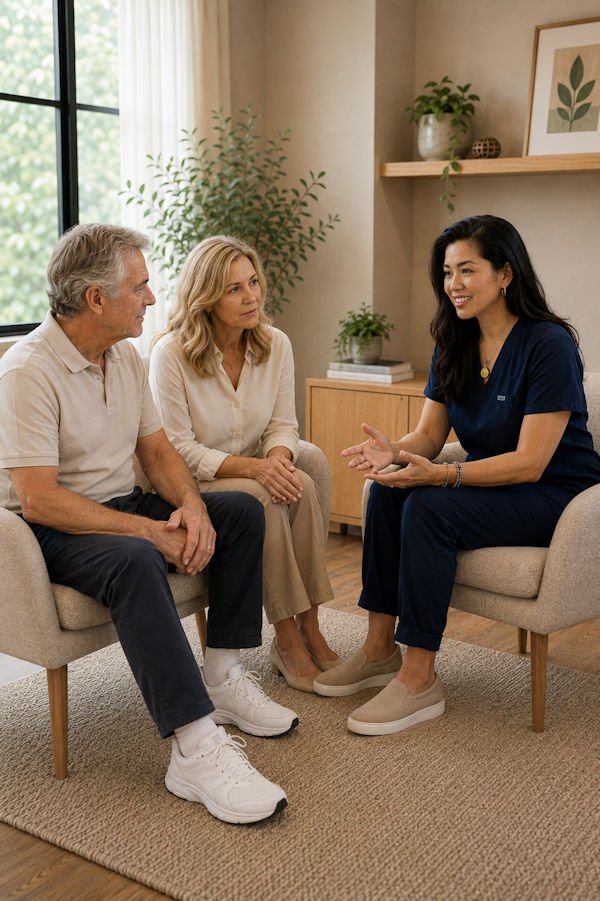
Chemotherapy-induced peripheral neuropathy (CIPN) is one of the most common side effects of certain chemotherapy medications. These medications can damage the peripheral nerves responsible for sensation, movement, and balance, leading to symptoms that most often begin in the hands and feet.
While some people experience gradual improvement after treatment ends, others continue to live with persistent symptoms that interfere with sleep, work, exercise, driving, and the activities they enjoy
Although chemotherapy is essential for treating many cancers, the nerve damage it causes can have a lasting impact on quality of life. The good news is that evidence-informed treatment options are available to help improve nerve function, reduce symptoms, and support your recovery after cancer treatment.
At What's Good - Wellness by Design, we work alongside your oncologist, family physician, and healthcare team to help you navigate this next stage of recovery with personalized, evidence-informed care.
Signs & Symptoms of Chemotherapy-Induced Peripheral Neuropathy
Chemotherapy-induced peripheral neuropathy often develops gradually during treatment, although symptoms may continue to progress for weeks or even months after chemotherapy has ended.
The severity and pattern of symptoms depend on the type of chemotherapy medication received, the total dose, and how your nervous system responds to treatment.
Common symptoms include:
• Tingling or "pins and needles"
• Numbness that often begins in the fingers and toes
• Sharp, stabbing, or electric shock-like pain
• Increased sensitivity to touch or temperature
• Difficulty buttoning clothing, writing or picking up small objects
• Poor balance or feeling unsteady while walking
• Frequent tripping or difficulty navigating uneven surfaces
• Reduced ability to feel heat, cold or pain
• Symptoms that interfere with sleep or daily activities
For many cancer survivors, the most frustrating part of chemotherapy-induced peripheral neuropathy is that symptoms can persist long after treatment has ended. Simple tasks such as opening jars, fastening jewellery, walking on uneven ground, or carrying groceries may become unexpectedly difficult.
While not every case is reversible, many people experience significant improvements to their symptoms with the right treatment approach.
Did You Know?
Chemotherapy-induced peripheral neuropathy can sometimes continue to worsen even after chemotherapy has ended.
This delayed progression, known as coasting, occurs because nerve damage may continue after the medication has left the body.
Why Does Chemotherapy Cause Peripheral Neuropathy?
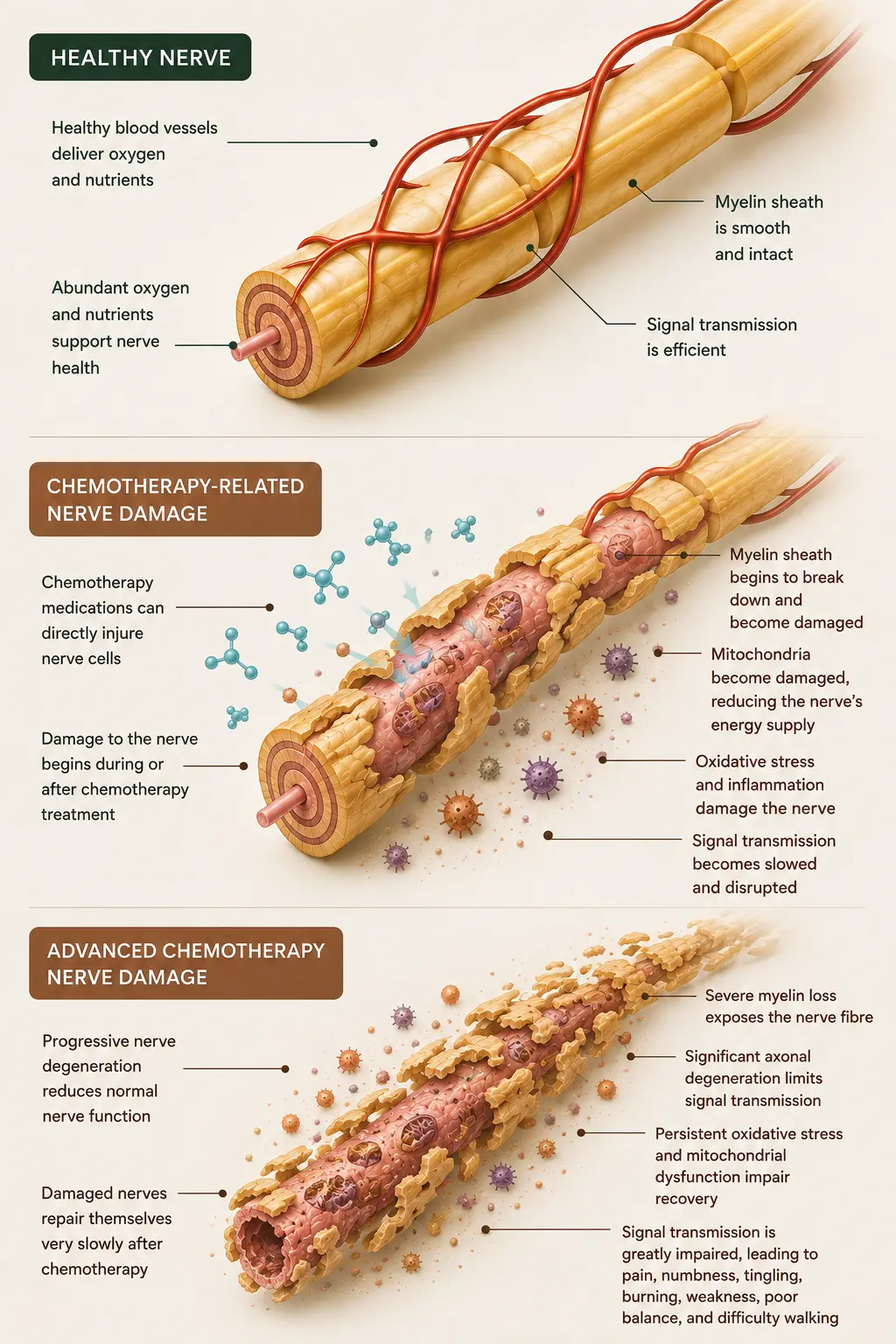
Chemotherapy medications are designed to destroy rapidly dividing cancer cells, but some medications can also affect healthy peripheral nerves. Drugs such as taxanes, platinum-based chemotherapies, and vinca alkaloids are among the most common causes of chemotherapy-induced peripheral neuropathy.
These medications can damage the nerve fibres themselves, the protective myelin sheath that surrounds nerve fibres, or both.
As a result, communication between your nerves and brain becomes disrupted. This can affect sensation, movement, balance, and coordination.
One of the reasons chemotherapy-induced peripheral neuropathy can be so frustrating is that symptoms don't always stop when chemotherapy ends. In some people, nerve damage continues to evolve for weeks or months after treatment has finished, a phenomenon sometimes referred to as "coasting."
Because peripheral nerves repair themselves slowly, recovery often takes time.
Although no treatment can guarantee complete recovery, improving circulation, reducing inflammation, and supporting healthy nerve function can help reduce symptoms and improve quality of life.
A Patient Case Study: Joan’s Return to Life After Chemotherapy
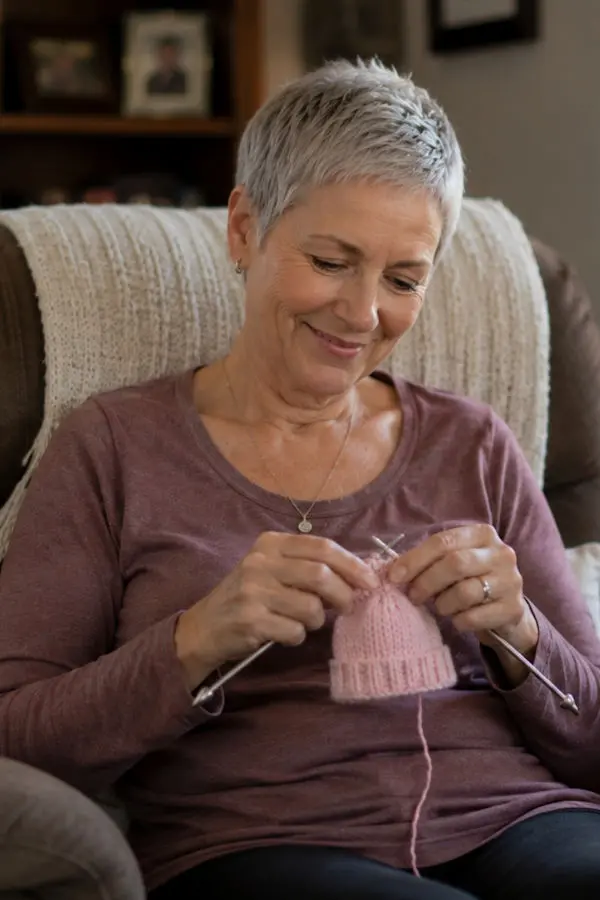
This case study is based on a real patient treated at What's Good - Wellness by Design. The patient's name and identifying details have been changed to protect privacy.
After successfully completing chemotherapy for breast cancer, Joan was grateful to have reached the end of treatment. She expected life to gradually return to normal, but the numbness and tingling in her hands and feet lingered. Simple tasks became increasingly difficult, and the hobbies that had brought her so much joy were suddenly out of reach.
For years, Joan had lovingly knitted tiny hats for premature babies in the Neonatal Intensive Care Unit (NICU) at SickKids Hospital. As the numbness in her fingers worsened, she struggled to hold her knitting needles and eventually had to stop. She also gave up playing pickleball because she no longer trusted her footing and became increasingly afraid of tripping and falling on the court.
During her Comprehensive Consultation and Sensory Assessment at What's Good - Wellness by Design, we identified measurable sensory loss consistent with chemotherapy-induced peripheral neuropathy. After determining that we could help Joan, we developed a personalized treatment plan combining acupuncture, ATP Resonance Frequency Therapy, functional nutrition, and lifestyle recommendations alongside her ongoing medical care.
Over the following months, Joan noticed improvements in both her symptoms and nerve function. As sensation improved, she became more confident on her feet and gradually returned to playing pickleball. She also picked up her knitting needles again and resumed making hats for premature babies, something she had deeply missed. Repeat sensory assessments demonstrated measurable improvements in nerve function throughout her programme.
Cancer treatment had already taken enough from Joan. Regaining the ability to knit and return to pickleball helped her feel like herself again.
While every patient's situation is unique and no treatment can guarantee results, many people have more potential for improvement than they've been led to believe.
Whether your goal is walking with confidence, returning to your hobbies or work, or simply sleeping through the night, your treatment plan is designed around the activities that matter most to you.
Our Approach to Treating Chemotherapy-Induced Peripheral Neuropathy
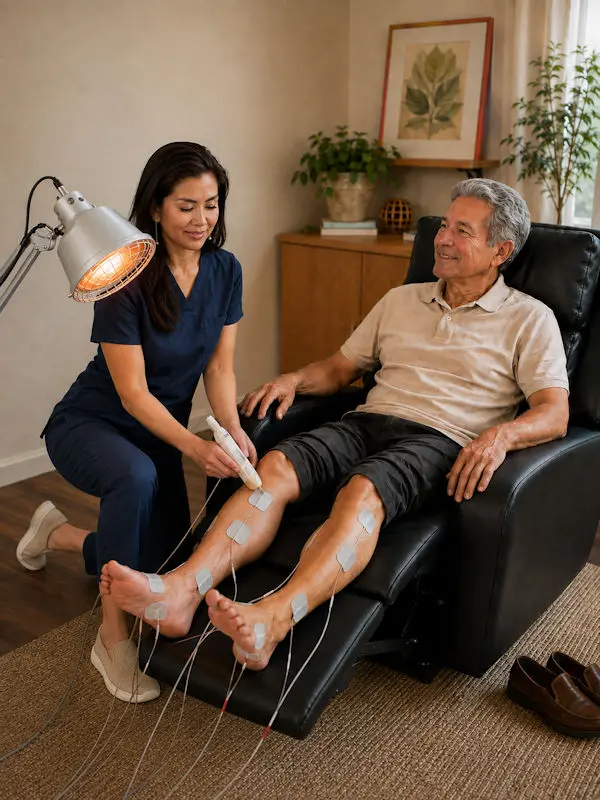
At What's Good - Wellness by Design, our goal is to help you recover as fully as possible from the neurological effects of chemotherapy. We aim to reduce pain, improve sensation, restore balance, and support healthier nerve function so you can return to the activities that matter most to you.
Cancer survivors often tell us they feel caught between two worlds: grateful their treatment is over, yet frustrated that neuropathy continues to affect their daily lives. Our role is to complement the care you've already received by focusing on the nerve damage that may remain after chemotherapy.
Every patient begins with a Comprehensive Consultation and Objective Sensory Assessment to evaluate the extent of nerve dysfunction and determine whether you are likely to benefit from treatment. We then develop a personalized treatment plan based on your symptoms, overall health, cancer history, and the severity of your neuropathy.
Because every cancer survivor's experience is different, treatment may include acupuncture, ATP Resonance Frequency Therapy, dry needling, infrared and photobiomodulation therapy, Chinese herbal medicine, functional nutrition, and lifestyle recommendations. Rather than relying on a single treatment, we combine complementary therapies that work together to support healthier nerve function while fitting alongside your existing medical care.
Throughout your programme, we repeat objective sensory assessments to monitor changes in nerve function over time. This allows us to objectively measure your progress, adjust your treatment plan as needed, and ensure your care continues to align with your goals.
Our comprehensive peripheral neuropathy programme has helped 85% of patients who complete treatment experience meaningful clinical improvement. While every patient's situation is unique and results can never be guaranteed, our goal is to support your recovery with compassionate, individualized care that complements your oncology team.
Finding the Right Treatment Starts with the Right Assessment
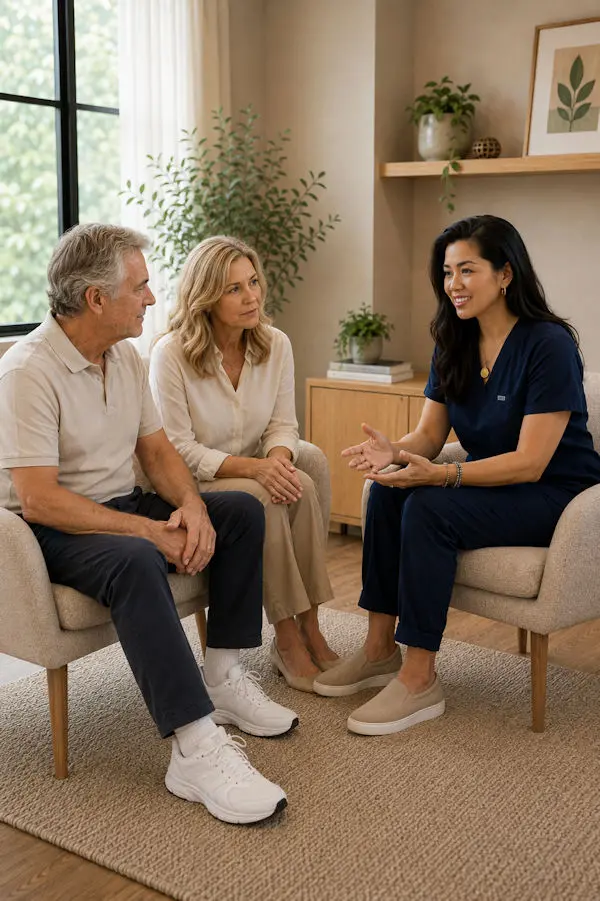
Not every case of chemotherapy-induced peripheral neuropathy is the same, and not every patient will benefit from the same treatment approach.
The type of chemotherapy you received, the severity of your nerve damage, your overall health, and how long you've been experiencing symptoms all influence what improvements may be possible.
That's why every patient at What's Good - Wellness by Design begins with a comprehensive consultation and objective sensory assessment before treatment recommendations are made.
Our sensory assessment measures how well the nerves in your hands and feet are functioning, allowing us to establish a baseline before treatment begins and objectively monitor changes in nerve function throughout your programme.
This assessment allows our team to:
• Understand how chemotherapy-induced peripheral neuropathy is affecting your daily life.
• Measure the extent of sensory loss.
• Determine whether you are likely to benefit from treatment.
• Develop a personalized treatment plan based on your specific needs and goals.
• Objectively track your progress at regular intervals.
One of the things that sets our approach apart is our commitment to honesty. If we believe treatment is unlikely to provide meaningful benefit, we'll tell you. If we believe there is potential for improvement, we'll explain what outcomes we believe are realistic and how we'll measure your progress along the way.
Our goal isn't simply to recommend treatment. It's to help you make an informed decision based on objective findings and realistic expectations.
Frequently Asked Questions
Research suggests acupuncture may help reduce neuropathic pain, improve circulation to peripheral nerves, and support healthy nerve function. At What's Good - Wellness by Design, acupuncture is combined with other evidence-informed therapies as part of a comprehensive treatment plan tailored to your individual needs.
In many cases, yes. Treatment recommendations depend on your overall health, blood counts, type of chemotherapy, and your oncologist's recommendations. We will always work collaboratively with your oncology team to ensure your care is appropriate and safe.
Some people experience gradual improvement after chemotherapy ends, while others continue to experience symptoms for months or years. Because every case is different, a comprehensive consultation and sensory assessment can help determine the extent of nerve damage and whether treatment is likely to help.
Several chemotherapy medications are associated with peripheral neuropathy, including taxanes, platinum-based drugs, vinca alkaloids, and certain proteasome inhibitors. Your cancer treatment history helps us understand the pattern of your symptoms and guide your treatment plan.
Yes. Many people experience symptoms in both the hands and feet. Numbness, tingling, burning, weakness, and reduced dexterity can make everyday tasks more difficult. Our assessment helps identify where nerve function has been affected and how severely.
Some people experience a delayed worsening of symptoms after treatment, known as coasting. This occurs because nerve damage may continue to evolve even after chemotherapy has stopped. Although this can be discouraging, treatment may still help improve symptoms and support nerve recovery.
No. Our treatments are designed to complement, not replace, the care provided by your oncologist and healthcare team. We are happy to collaborate with your medical providers whenever appropriate.
Acupuncture is covered under many extended health benefit plans, although coverage varies between providers and policies. We recommend checking your individual plan for details. Your Initial Comprehensive Consultation and Sensory Assessment is $47 (regularly $100).
Take the First Step Toward Better Nerve Health
Living with chemotherapy-induced peripheral neuropathy doesn't have to be something you simply endure long after your cancer treatment has ended.
The first step is understanding the extent of your nerve damage and whether treatment is the right option for you.
During your Comprehensive Consultation and Sensory Assessment, we'll evaluate your nerve function, review your symptoms and medical history, and determine whether you are likely to benefit from our peripheral neuropathy programme. If treatment is appropriate, we'll explain what improvements may be possible and develop a personalized treatment plan tailored to your individual needs.
Book your Comprehensive Consultation and Sensory Assessment today and discover what's possible.